
If you’re exploring offshore hiring in Latin America, you’re likely asking one straightforward question: what will this actually cost?
The answer depends on more than just salary. Lower living costs in Latin America are a key reason why offshore hiring is more affordable. Country, role type, engagement model, taxes, benefits, and even the tools you use all factor into your total spend. Location is the single biggest macro cost lever because wages reflect local living expenses and macro-economic factors like currency strength and tax policy. Get these wrong, and your “cheap” hire becomes expensive fast. Get them right, and you unlock 40–70% savings compared to equivalent U.S. roles.
Deloitte’s Global Outsourcing Survey shows that access to talent, not just cost savings, has become the primary driver of offshore hiring decisions, underscoring why total cost structure matters more than headline rates.
This guide breaks down the complete cost structure of hiring offshore in Latin America, from rate benchmarks to hidden overhead most companies miss. By the end, you’ll have a practical framework for budgeting your first (or next) LATAM hire.
Offshore hiring isn't just about finding cheaper talent anymore, but about accessing global talent intelligently. This approach has exploded because smart businesses figured out that geography is yesterday's constraint, and your competition is already fishing in global waters while you're still casting nets in the same local pond. When you're looking to expand, hiring offshore isn't just strategic, it's survival, especially when your local talent pool feels more like a talent puddle with Silicon Valley price tags.
Latin America has emerged as one of the strongest regions for U.S. companies hiring remote contractors thanks to:
Here's the thing: leveraging offshore hiring means you're not just scaling your services, you're building a talent ecosystem that breathes with your business needs. You're bringing in offshore talent who don't just do the work, they think differently, solve problems you haven't even imagined, and adapt faster than your office coffee gets cold. Offshore workforce isn't attractive because it's cheap, it's attractive because it's a smart business move.
Whether you're a scrappy startup or an enterprise giant, this opens doors you didn't even know existed. The real question isn't whether you can afford to hire offshore talent. It's whether you can afford not to.
For U.S. companies hiring export-oriented remote talent in top LATAM markets (Argentina, Brazil, Colombia, Mexico, Chile), here’s what you can expect to pay in 2026.
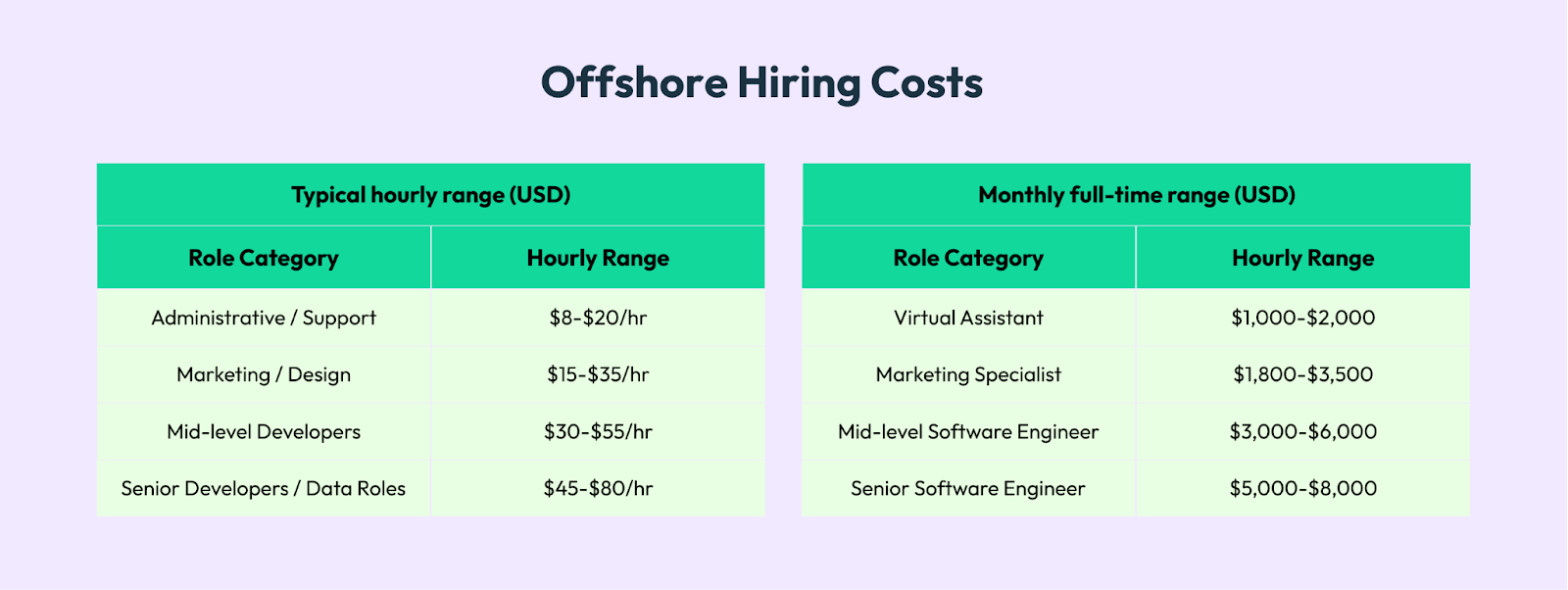
When comparing software development rates, Latin America generally sits between Eastern Europe and North America/Western Europe. The average software development rate in Latin America is around $61, which is higher than Eastern Europe but lower than North America and Western Europe.
For context, U.S. equivalents for these same roles often run 2x–3x higher in total cost of employment. A senior software engineer in San Francisco might cost you $15,000–$20,000/month all-in, while a comparable engineer in Mexico City or Buenos Aires might run $6,000–$9,000/month.
These figures reflect export-market contractor rates, not local-market salaries. Contractors working with U.S. companies usually price themselves in USD and sit in the top tier of their local markets.
Let's be honest, most companies that are building offshore teams are doing it because the math finally makes sense.
Offshore talent from Latin America or Eastern Europe isn't just cheaper, they're cost architects for your entire operation. We're talking high-quality work at competitive rates, often a fraction of what you'd shell out for local hires in North America. This is about being a resource strategist. You're not just reducing management overhead, you're freeing up capital to invest where it actually moves the needle.
By hiring offshore, you're cracking open a talent vault that most of your competitors don't even see yet. Offshore hiring connects you with specialized experts who'd be impossible to source or afford in your backyard. Need someone with cutting-edge technical expertise? They're out there, and they're not necessarily sitting in Silicon Valley. Modern collaboration tools have turned time zones from obstacles into advantages, making integration so seamless you'll forget these people aren't down the hall.
The cost structure is simple and predictable.
Your total cost is typically only 5–15% above the hire’s base rate, covering payment platforms, FX, and tooling.
Compare that to employment models, where total cost can balloon 30–70% above base pay due to taxes and benefits.
Salary is only one piece of the puzzle. When you hire offshore professionals in LATAM, your total cost includes several categories that vary significantly based on country. Offshore cost is essential for accurate budgeting.
Base compensation is driven by several factors that compound in predictable ways:
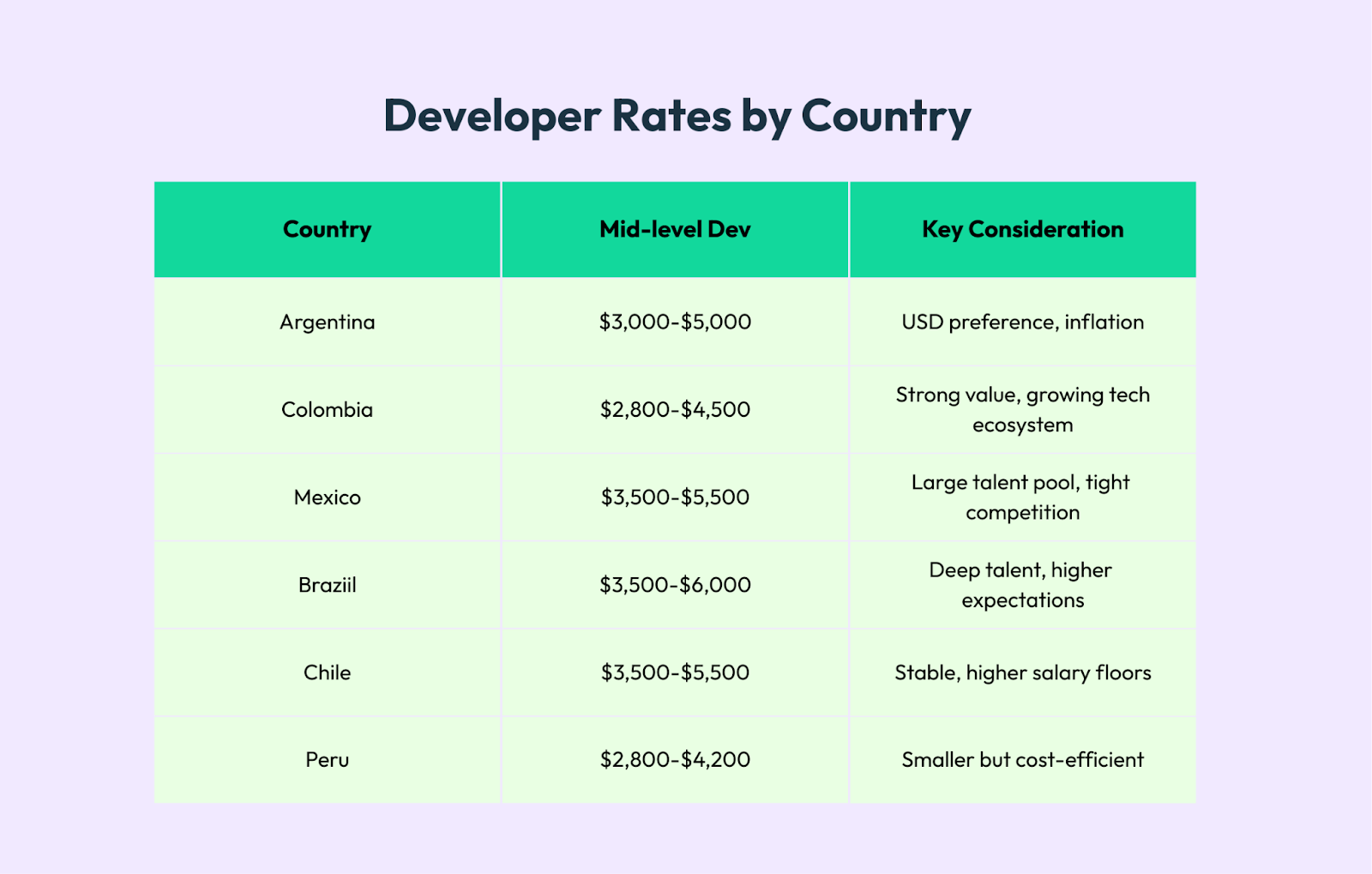
Export-oriented professionals in LATAM increasingly quote USD-based rates that are somewhat detached from local inflation. If you’re hiring for a U.S. company, expect to pay in the top 10–20% of the local market to secure strong talent with English proficiency and retention.
Rates can vary 20–40% across LATAM for similar roles.
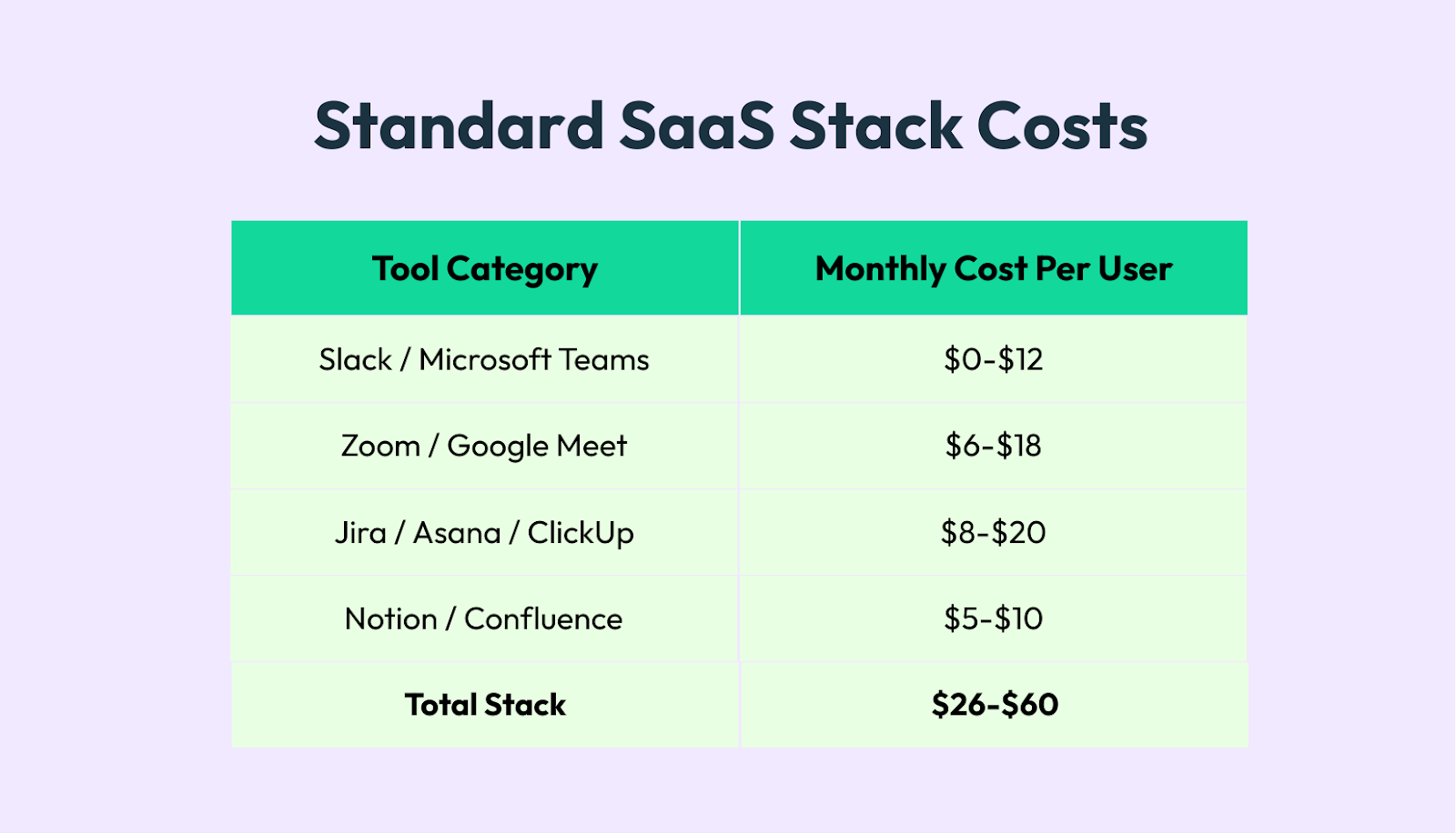
3. Tools, Payments, and Platform Fees
Ongoing tools and platform costs add $30–$150 per seat per month depending on your stack complexity and whether you’re using EOR services.
Typical monthly per-contractor costs:
For a $4,000/month contractor, your all-in cost is usually $4,050–$4,200.
International payments to LATAM talent typically involve:
Popular tools: Wise, Payoneer, Paypal, Takenos, and international bank wires.
Typical costs:
Paying in USD to USD accounts (where workers have multi-currency accounts) can reduce FX friction. This is especially valuable for offshore contractors in Argentina and Brazil who prefer dollar-denominated payments.
While minor compared to salaries, these tools must be included in per-head budgeting for any offshore role requiring collaboration.
Recruitment Cost
Finding the right LATAM hires takes time and money. When hiring offshore employees, it is crucial to define roles and skill requirements clearly before starting the offshore hiring process. This ensures you attract the right candidates and streamline recruitment.
Tangible cost components:
Average time to hire: 3–8 weeks depending on country and seniority.
Specialized LATAM-focused hiring partners like WeHireFast reduce both time and cost, even with agency fees. Our clients care most about not wasting time on bad hires, and that’s exactly what WeHireFast delivers. With a structured 3-meeting process and a timeline of just 10 business days from kickoff to offer, clients save over 10 hours per role in internal coordination, screening, and interviews. Instead of sifting through unqualified resumes, you get a curated shortlist of pre-vetted, high-caliber candidates who’ve already passed skills tests, reference checks, and cultural alignment assessments. It’s a hiring experience designed to move fast, without compromising on quality.
Independent contractor hiring works best when expectations are structured around outcomes, not control.
Best practices:
Long-term, full-time contractors are common in LATAM, but they must retain economic independence to remain contractors.
Building an accurate budget requires more than looking up salary ranges. Offshore hiring allows companies to focus on their core business and high-value strategic initiatives by offloading certain tasks to offshore teams. Follow this 4-step process:
Bottom-up budgeting approach:
True budget: ~$5,325/month
For high-inflation markets like Argentina, budget for annual adjustments. Your offshore contractors will expect raises that at least partially offset local currency erosion.
Consider creating per-country scenarios (“What if we hire this role in Mexico vs. Colombia vs. Brazil?”) to visualize trade-offs between cost efficiency, talent depth, and time zone alignment.
Let’s put concrete numbers to the cost savings LATAM offers.
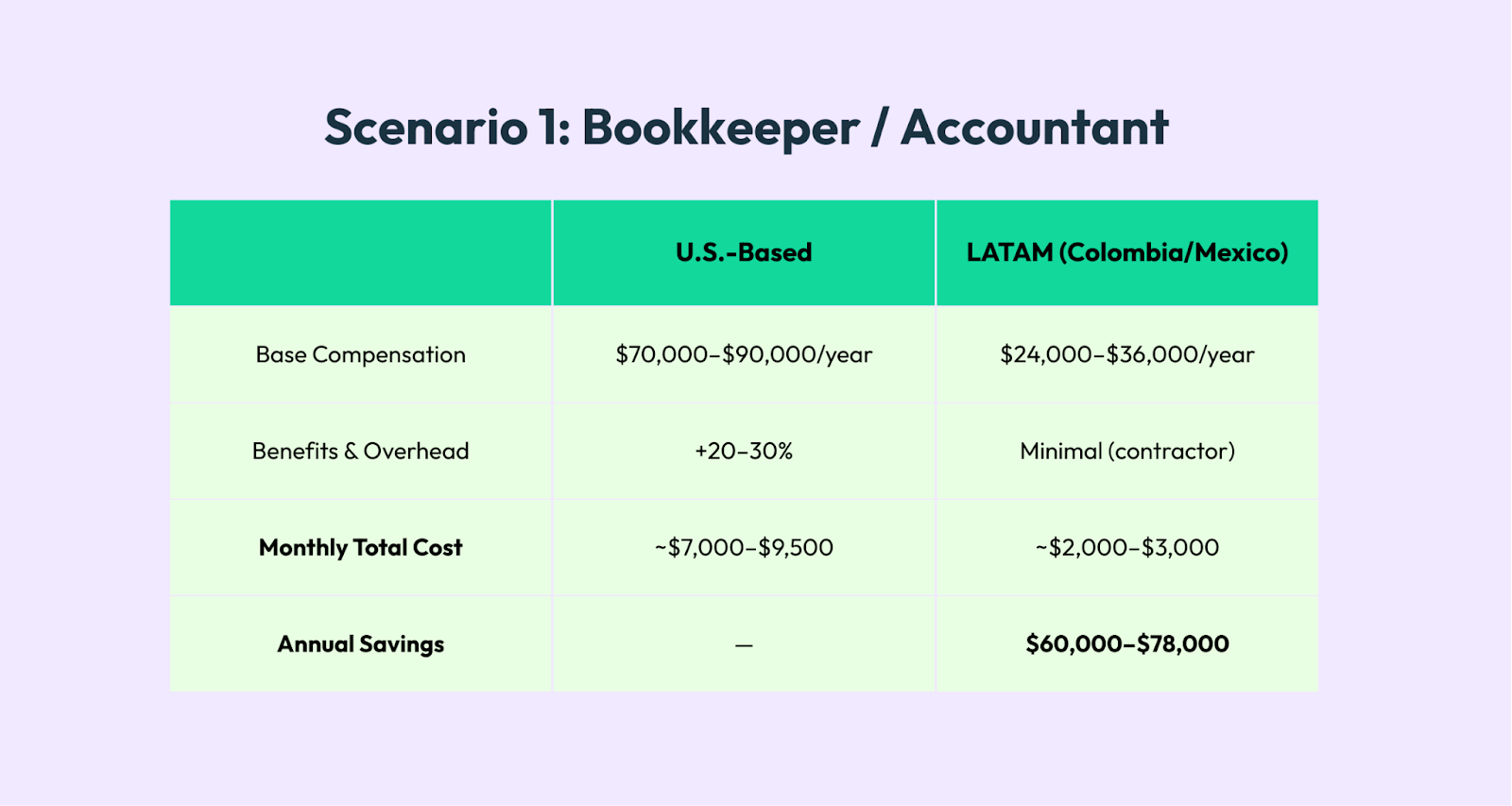
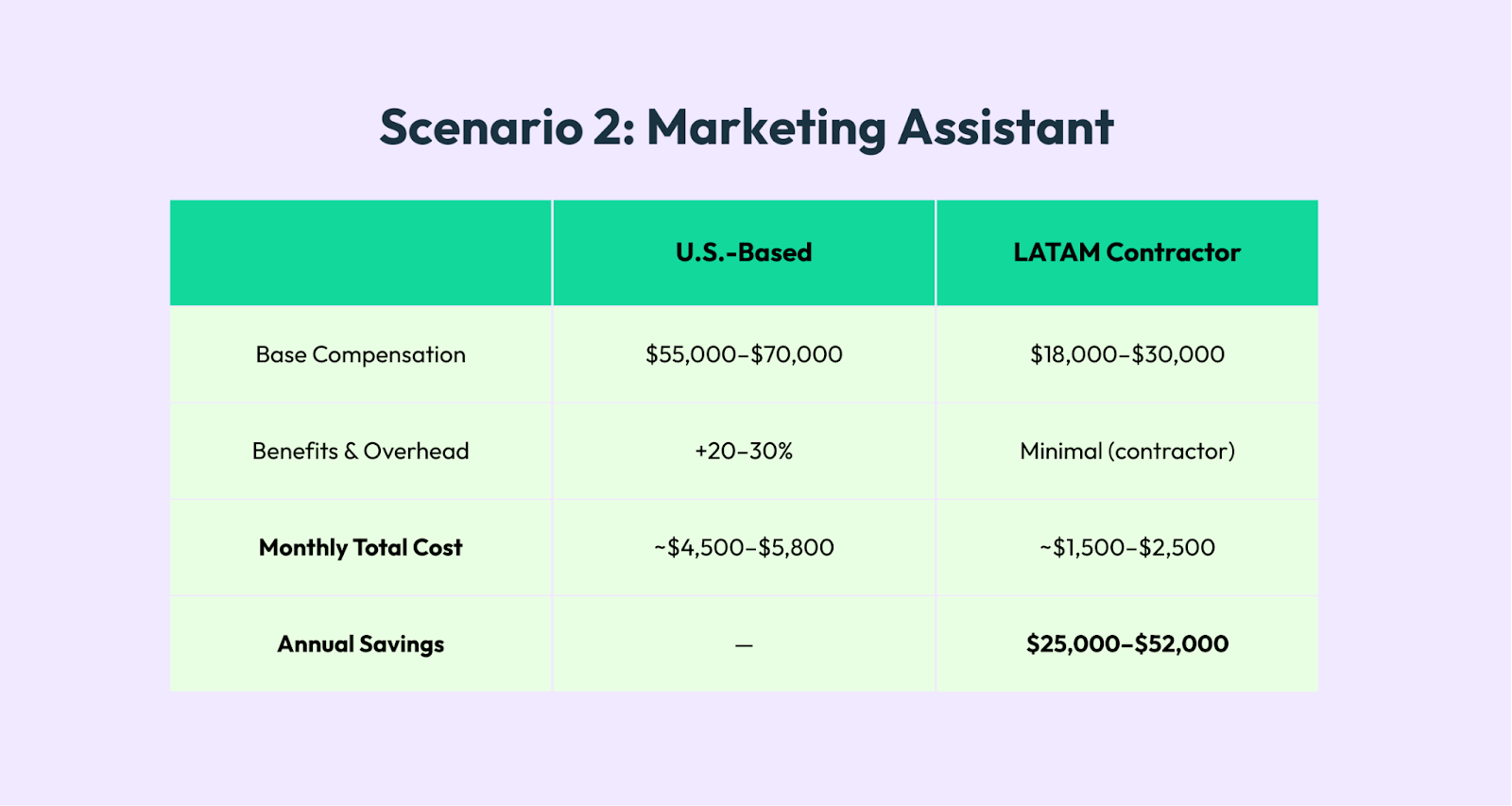
These scenarios assume comparable skill levels and English proficiency. The cost advantages of hiring in Latin America remain substantial even after accounting for hidden costs and overhead.
Even after factoring in:
LATAM contractor hiring still delivers 40–70% savings compared to equivalent U.S. roles, especially for technical, marketing, and operational positions.
The companies that win aren’t chasing the lowest rates. They’re:
Latin America offers US based companies the best balance of cost, quality, and time zone alignment for building distributed teams. Unlike outsourcing agency relationships with Eastern European countries or Western Europe, LATAM combines meaningful cost advantages with same-day collaboration and strong cultural fit. Regions like Eastern Europe are also recognized for their strong technical education, which contributes to the high quality of offshore talent available globally.
Labor cost savings can reach 40–70% compared to U.S. hires when planned properly. But success depends on choosing the right country, and pay level for your specific needs. Compliance, onboarding, and management must be treated as part of the real cost, not afterthoughts.
The track record of companies hiring in LATAM is clear: those who invest in proper processes and competitive compensation build stable, productive global teams. Those who chase the lowest possible rates often face turnover, quality issues, and hidden costs that erode their savings.
Next steps:
Whether you’re building an offshore development team of senior software engineers or hiring your first virtual assistant, Latin America’s global talent pool offers a compelling path to reduce costs while maintaining quality. The key is approaching it as a strategic investment, not just a line item to minimize.


